Hello my name is Aisha Farah (9129) and this my A2 media blog. I am in a group with Ray Baker 9031 and Sayo Ajoje 9182. To see my A2 Advanced portfolio, please click on the 3 labels on the right named A2 Research and Planning, A2 Construction and A2 Evaluation
The age range we decided to focus on was 16-24 year olds. We used
casting choices, camera and mise-en-scene to help create representations which
would appeal to young adults.
Horror movies give a thrill and excite the young audiences much
easier than older ones. The young audiences are also less susceptible to being
put off the film by violence or unnatural images which may make older audience
feel negative towards the film.
After researching how the different genders were portrayed in
successful films, it was clear that the male gender was strongly represented,
as shown below.
In terms of wider context, our film centres around a female. because of this we looked at the stereotypes of females and we decided to create a character who directly challenges this. Below is a presentation about female representation, it will be going over stereotypes and how our character challenges them.
The production company that we chose for our film is 'Hammer productions' . We chose them because they produce films that are 'synonymous with horror'. It is arguable that they defined the genre in Britain with classic movies such as Dracula and The Curse of Frankenstein which spawned numerous sequels and remakes. The horror themes that were poignant in Hammer productions were explored in our film sequence. During its most successful years, Hammer dominated the horror film market, enjoying worldwide distribution and considerable financial success. This success was due, in part, to distribution partnerships with major United States studios, such as Warner Bros.
The production budget was based on the fact that Hammer films usually have low budgets, but nonetheless they appeared lavish, as they made use of quality British actors and cleverly designed sets. A small budget would definitely be appropriate for our film sequence as it is a small British Independent film, and one that doesn't exactly require CGI or special visual effects. Our film would most likely receive funding from the BFI. As they provide funding for production of British films that fit their criteria of a British film. Since our film fits most of these requirements, it would be smart to apply for the funding, Below is a presentation on production budget, and it will compare two films, one that is high budget and one that is low budget and it relates to our film
The distributor we chose was 'Warner Bros' it is the world's second largest media and entertainment conglomerate in terms of revenue. It is a fully integrated broad based entertainment company, one of the most respected, diversified, successful motion pictures.
In terms of its marketing strategies, their ultimate success hinges on the quality of its marketing campaign. An average studio movie marketing budget costs around $31 million and the average movie costs $47.7 million. Recent marketing tactics can go from viral videos, apps to posters and alternate-reality games. these tactics helped to sustain the interest of the audience in the movies.
However, it is very unlikely that this will be the same budget for our film. As it is not a blockbuster or apart of a franchise but a British Independent Film. This means that the budget will be a lot more modest, however more than the budget for paranormal activity.
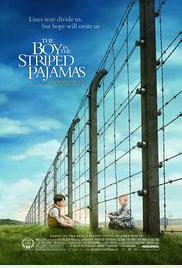
An example of a budget from a British production company working with a huge American distributor like Warner Bros would be "Boy in the striped pajamas" which was £12.5 million with the company Miramex owned by Disney and HeyDay Films a British production company. This helped us with the idea of how much the budget for our film would be, we decided it was most probably going to be around £15 million
The horror/thriller genre is definitely widespread with a lot of different types of fans due to its mass appeal. We made sure to have as many different aspects in terms of themes which could target specific groups, such as 16-24 year olds, fans of the genre and females. The latter part was targeted through the "final girl" concept who is the lead throughout the film allowing for the younger female audience to look up to the character and see someone who resembles them.
I read many different articles in terms of the gender divide in the film industry, some facts were mentioned and they were from wikipedia and the sources below:
Indiewire: Study on Women Directors 2013
Washington Post: Directors 2016
Below is a presentation on audience it will cover fans, different ages, gender and our secondary audience.
Using the uses and
gratifications theory we could appeal to and attract audiences effectively. Below
is a table showcasing how we done this in relation to a case study film, too
see it in more detail, click on the picture
Audience Feedback
To find
out how successful our film opening was we interviewed two boys and two girls.
See below to watch the videos.
We chose people who
were a part of our target audience in terms of age. Through the interviews we
received positive and negative feedback which helped us in terms of what we do
better 'next time'
Positive feedback
entailed:
ØThe cliff hanger at the end of the sequence in terms of its
timing and effect - this links to the escapism theory. The fact that the cliff
hanger hooked the audience, means that they were immersed in the sequence and
therefore it acted as a form of 'escapism'
ØThe effect on the title which added to the style of film we
were going for
ØThe low-key lighting which added to the mystery of the
sequence - this links to the theory about escapism and entertainment, the
lighting was a way to showcase the mysterious atmosphere and that came across
as it had the audience asking questions, therefore increasing their interaction
with the sequence.
Negative feedback was
minimal and it was mainly focused on:
ØThe acting of the antagonist which could have been more
convincing
ØThat there should be more parts for the antagonist showing
him participate and engage with the incident so that it would be clearer - I
understand where this came from and it was also something we picked up on as
group however we all agreed that "less is more" and that we wanted to
keep the audience slightly confused to increase their level of interaction with
the sequence.
The people we interviewed were all fans of the genre, so
they fit into our primary audience group, and they all agreed that our film
opening had the typical conventions of a thriller/horror film. This was based
on the uses and gratification theory, to make sure that we our audience was
feeling similar 'emotions' when watching a horror film that is out in cinemas
now. In conclusion, the feedback we received from the focus group and our peers
proved that we meet the demands of the brief and the aims that we had set for
ourselves.